Does Fitbit track blood pressure? Learn the truth, limitations, supported features, and what Fitbit can and cannot measure.
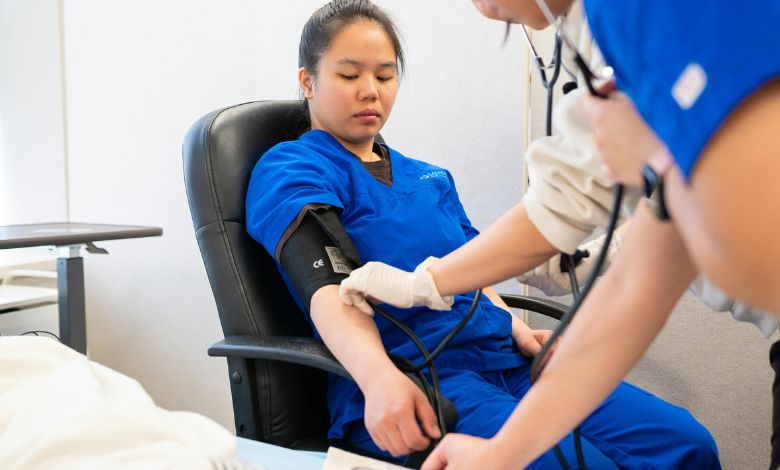
I was sitting in a doctor’s waiting room, nervously watching the nurse wrap a blood pressure cuff about my arm. You realize the quiet hum of the machine, hard pressure, few seconds where you keep your breath without being aware of it. When the reading arrived a bit higher than usual, my first thought wasn’t panic,it was confusion.
I transport a Fitbit every single day. It tracks my steps, my sleep, my heart rate, even my stress levels. So naturally I wondered: Does Fitbit track blood pressure?
It felt like a reasonable assumption. If a small device on my wrist knows a lot about my body, of course blood pressure should be part of the deal… accurate?
As it turns out, the answer is more sophisticated than a simple yes or no. And along the way, I learned a lot,not just about Fitbit, but about the reality of wearable health tech: understanding what really works, what it can (and can’t) change, and why the limits of these devices are equally crucial in their use.
Why Everyone Track This Question
Let’s break it down all under Why? Everyone track this question. The search query does. Does the Fitbit track blood pressure by chance? This one comes from many real places.
Blood pressure is one of those health metrics who quietly controls everything. You encounter it growing. You don’t hear the alarm when you’re not alarmed. Nevertheless, doctors take it seriously as a reason, It is closely related to heart disease, battle, kidney issues, And long- term health risks.
Add now wearable technology I the mix.
Fitbit We are trained to expect constant insight:
- Daily step counts
- Real- time heart rate
- Stages of sleep
- Stress score
- Health Trends over months and years
So when blood pressure If it isn’t, it seems like something is missing.
This is why the population apply this question- and why confusion is so common.
Card, Honest Answer
Let’s get straight to the point.
No, FitBit does not track directly or measure blood pressure.
Is not a Fitbit model, no meaning, Versa, charge, or Inspire, It can supply you a true blood pressure reading Appreciate 120/ 80 mmHg.
If this surprises you, you’re not alone. I assumed the same thing for years.
But once you understand why, it starts to generate sense.
What Fitbit Actually Measures ( And Measures Well)
Fitbit is not a weak device. Actually, who is so excellent at? it’ s designed to.
Heart Rate Monitoring
On the core of every Fitbit is an optical heart rate sensor. It uses light to detect changes in blood flow to your skin. How fast is it allowed to rain? your heart is to kill
This works incredibly well:
- Resting heart rate
- Exercise heart rate
- Long- term trends
Many people Corresponds to error heart rate with blood pressure- But they are not the same thing.
Assess of it like this:
- Heart rate Tells you how quickly the engine running
- Blood pressure Tells you how much capability the engine Moving on with
Same system. Different goals.
Heart Rate Variability ( HRV)
Fitbit Tracks too HRV, Mostly during sleep. This calculation shows how much time varies between each heartbeat and is often used to assess recovery, stress and nervous system balance.
HRV It is interesting. It’ s useful But again- it’ s No blood pressure.
Sleep, stress etc Activity Data
Fitbit Lights up when it comes to talking lifestyle data. Sleep quality, daily movement, Stress levels, All of these have an indirect effect on cardiovascular health.
And this is where the confusion falls.
Because Fitbit the health trends, many users assume blood pressure. I have to hide the data somewhere.
It is not so.
Why Fitbit Can’t Measure Blood Pressure
This is the part I had to finish.
Blood pressure measurement Require pressure, Literal physical pressure is applied an artery. That is why traditional monitors use inflatable cuffs.
Fitbit devices:
- There is no cuff
- Do not compress the arteries
- Not a goal arterial pressure
- They Trust the light, not the power
Without pressure, you accurately determine systolic and diastolic values. It doesn’t matter smart the software is, the hardware It’s just not made for it.
The Myth of “Cuffless Blood Pressure” Wearables
You may have heard these claims Fitbit( Or other wearables) Can estimate blood pressure By using advanced algorithms.
It usually refers to Pulse Arrival Time( PAT) or similar methods.
In theory, this sounds impressive. Measure how quickly a pulse wave travels the body and estimate pressure Based on that timing.
Practically speaking?
- Results Varies wildly
- Readings Change with attitude, stress, temperature
- Constant calibration with a real cuff It is necessary
Fitbit Not officially presented blood pressure Uses approximations to these methods. And importantly, none of Fitbit’s blood pressure claims have been validated for medical diagnosis.
That distinction matters.
Can You Log Blood Pressure in Fitbit?
Yes- but with limitations.
Fitbit allows manual blood pressure Log in its app. This means you can:
- Goal BP By using a real monitor
- Go the numbers Manually
- Track trends over time
This is useful if you pursue everything in one place. But let’s be honest– when individuals ask, the community hope the original question.
Automation is the dream. It is a manual entry compromise.
About what Third- Party Apps?
I experimented out of curiosity. The idea Looks attractive: connect Fitbit data, Make an estimated blood pressure.
The reality?
- Inconsistent readings
- Large swings
- Without explanation
- No clinical backing
I stopped using it almost immediately.
If your health decides The case- and blood pressure Certainly it does- approximations are not enough.
Fitbit vs Other Smartwatches
This question almost always leads to comparison.
- Fitbit
- No direct blood pressure measurement
- No cuffs
- No approval BP feature
- No direct blood pressure measurement
- Apple Watch
- Doesn’t measure up either blood pressure
- Excellent heart health tools
- Still needed external BP monitor
- Doesn’t measure up either blood pressure
- Samsung Galaxy Watch
- Offers BP estimation I some regions
- Mandate regular calibration
- Limited availability
- Not universally accepted
- Offers BP estimation I some regions
So while Samsung When it gets closer, it still isn’t a replacement to traditional monitoring.
My Personal Turning Point
I’ ll Admit it- I would Fitbit to do everything.
When I realized it was untraceable blood pressure, I was disappointed. Almost value angry a promise was broken, although no promises were ever made.
But that moment Force me to take it my health More seriously. The bought a proper blood pressure monitor.
I started checking once or twice a week.
I saw patterns Fitbit alone Could never demonstrate.
The irony is Fitbit Still played a role, Just don’t the role I expected.
It helped me sleep better, relocate more, deal with stress and understand my habits. And those habits directly affected my blood pressure readings over time.
The Smart Way to Use Fitbit If Blood Pressure Matters
Here’ s A balanced approach I now recommend:
- Use Fitbit to daily health trends
- Track sleep, voltage, heart rate, and activity
- Use a dedicated blood pressure monitor Regularly
- Read the log manually if you aspire long- term insight
- Never rely on a wearable for diagnosis
Analyze about it Fitbit Seam a guide, Not a doctor.
Will Fitbit Never Track Blood Pressure?
Possibly.
Fitbit( under Google) Actively investigating cardiovascular health signals. The technology is getting better. Sensors get ready.
But unless:
- Hardware Changes
- Accuracy Improves
- Medical approvals exist
Blood pressure tracking The rest is outside Fitbit’ s reliable capabilities.
Key Takings:
- So, does Fitbit track blood pressure?
No , not directly, not accurately, and not in a medically reliable way. - But that doesn’t make Fitbit useless. It makes it honest.
- Wearables are tools, not miracles. When used correctly , alongside proper medical devices , they can genuinely improve health awareness.
- And sometimes, knowing what a device can’t do is just as valuable as knowing what it can.
Additional Resources:
- Fitbit Hypertension Study Lab , Official Fitbit Support: Details Fitbit’s experimental “Hypertension Study Lab” research using Pixel Watch data to explore whether sensor signals (like pulse arrival time) can correlate with early signs of high blood pressure.
- Solved: Blood Pressure Log – Fitbit Community: Official community thread confirming Fitbit removed manual blood pressure logging from the app due to low usage , so there’s no native BP log today.