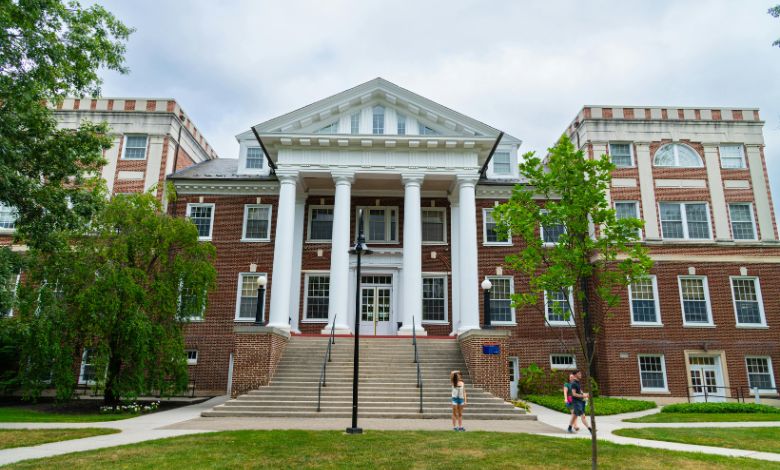
Lake Erie College restructuring schools to adapt to changing demands, merging programs for a stronger academic future.
When I first heard that Lake Erie College’s school restructuring was underway, my first reaction was – “Oh no, no other college is going through cuts and changes!” I’ve seen this story unfold in many institutions over the past decade, and it’s rarely that simple. But as I began to dig deeper, I realized that what happened at Lake Erie College isn’t just a story of scarcity or loss, it’s actually a story of adaptation, survival, and forward-looking strategies that reflect broader changes in our society and how education is evolving to meet them.
This post is not just a dry news summary. Think of it as a guided tour through what’s happening, why it’s happening and what it means to the people who call Lake Erie College home — and, by extension, what it reveals about the shifting priorities within our society today. So grab a coffee – let’s explore it together.
Scene Setting: What Happens at Lake Erie College
Lake Erie College, a private liberal arts institution located in Pennsville, Ohio, recently made headlines when it announced a major academic restructuring. In June 2025, the college officially announced that it would reduce its academic schools from five to three as part of a plan to better align with workforce demands and regional employment needs.
The reorganization consolidated several academic divisions and led to the creation of three main schools:
- Education school
- School of Business and Professional Studies
- Stream School (Science, Technology, Research, Engineering, Veterinary and Medical Sciences)
At first glance, this might seem like typical higher education “restructuring” jargon,merging departments, renaming programs, redistributing leadership roles. But if you peel back the layers, there’s a lot more going on here.
Lake Erie College Restructuring The school is reimagining itself in response to a rapidly changing educational landscape. Student interests are evolving, job markets are changing, and colleges everywhere are being forced to ask tough questions: What programs truly serve the future of students? Where should the resources go?
In short, school restructuring at Lake Erie College is not just an internal realignment,it is a strategic move to remain relevant, sustainable, and impactful in a world that is changing faster than ever.
A quick look back: Why colleges are restructuring everywhere
Before we delve deeper into the Lake Erie case, it’s worth zooming out for a moment. If you’ve been following trends in higher education, you’ve probably noticed a pattern,small and medium-sized private colleges across the United States are facing serious challenges.
Enrollment is falling, especially in traditional liberal arts fields such as philosophy, theater and communication. Costs are increasing for both institutions and students. And in a world driven by technology, healthcare and business innovation, students are increasingly drawn to majors that seem more “hands-on”.
I remember visiting a small liberal arts college in Pennsylvania a few years ago where an art professor said, “We used to have 40 students in our design program; now we’re lucky if we have 10 students.” That change is not unique. It’s happening everywhere,from New England to the Midwest.
So when Lake Erie College Restructuring Schools popped up as a title, it didn’t surprise many observers. But what makes this story unique is how the college is being restructured,not just to downsize, but to focus on growth areas that meet real needs.
“Why” behind restructuring
Lake Erie College did not make this decision overnight. According to official statements from the college, the move is aimed at:
- Address the regional talent gap in sectors such as business, education, science and healthcare.
- Streamline resources so that high-demand programs get the support they need.
- Improve student outcomes by focusing on career preparation and hands-on learning.
In other words, the college isn’t just cutting programs , it’s strategically reallocating its strengths.
President Jennifer Shuler emphasized that this is about preparing students for a workforce that is evolving at lightning speed. “We are responding to the needs of our region and beyond,” he said. “Our new structure positions us to meet these demands head-on.”
Now you might be wondering – what about the programs that were affected? Let’s talk about it further.
Programs that were reorganized or put to sleep
Yes, some programs were affected. As part of the restructuring, Lake Erie College put some programs into “inactivation,” including theater, communications, and graphic design.
In higher terms, hibernation does not mean being permanently closed. This means that the college usually puts these programs on ‘pause’ until further notice due to low enrollment or changing market relevance.
As someone who once majored in a communications-related field, I can understand the pain of hearing that your discipline is being diminished. But having seen similar restructuring, I also know that it does not necessarily mark the end of those areas at the college. Instead, it often opens the door to reimagining them in more modern, interdisciplinary ways.
For example, communication may reappear as a component of a business or digital marketing. Graphic design can develop into a concentration in media technology. In other words – this is not goodbye, see you later.
We introduce flows – a new approach to science and innovation
In my opinion, the most exciting part of this reorganization is the creation of the School of Streams. This acronym stands for Science, Technology, Research, Engineering, Animal and Medical Sciences – and yes, it’s as ambitious as it sounds.
The school merges the college’s former science departments with the renowned equine studies program, which has been a signature feature of Lake Erie College for decades. By combining animal science with medical and technical subjects, the college positions itself at the intersection between innovation and tradition.
As someone who has seen how quickly fields like veterinary science, biomedical research and environmental studies are expanding, I think this is a huge step forward. The stream reflects what modern students want – practical experience, interdisciplinary skills and direct career paths.
It’s a smart way to future-proof an education, ensuring that Lake Erie graduates are not only well-educated, but also well-equipped.
From a Student’s Perspective: What This Means
If I were a current student at Lake Erie College right now, I’d probably have mixed feelings. On one hand, change is unsettling. There’s always that sense of, “What’s going to happen to my program? Will my degree still hold value?” On the other hand, these transitions can create incredible opportunities.
When colleges restructure with purpose , not panic , it can lead to stronger programs, more funding in key areas, and better job outcomes for students.
For example, a student majoring in biology might now have easier access to research opportunities through STREAMS. A future teacher could benefit from closer collaboration between the education and business schools.
In essence, the new structure encourages more interdisciplinary learning , something employers increasingly value.
I remember when my own college revamped its curriculum to blend traditional majors with new applied courses. At first, everyone resisted. But within a few years, graduates were landing better jobs because their degrees reflected both theory and real-world skills. I can see Lake Erie College following that same trajectory.
From a faculty and administrative perspective
Now, let’s flip the coin. What does Lake Erie College restructuring mean for the school’s faculty and staff?
Restructuring inevitably brings uncertainty to professors and administrators. Reporting lines change, departments merge and resources change. But it also provides opportunities for collaboration across topics that may not have been discussed before.
The Faculty of Arts and Sciences can work more closely with business instructors on projects that link creativity and entrepreneurship. Educators can design cross-listed courses that prepare students for hybrid careers,think STEM communications, educational leadership, or healthcare marketing.
Of course, there is also an emotional side to change. Faculty members who have been building programs for decades may be disappointed to see them go dormant. This is natural. But many institutions have found that such moments can reignite academic innovation. When traditional silos are broken down, new ideas often emerge.
The big picture: changing higher education
Lake Erie College’s move is part of a larger story , a story that is rewriting the landscape of higher education in the 21st century.
For decades, colleges thrived on models built around separate, specialized departments. But now the real world is not so neatly divided. Employers want graduates who can think critically, collaborate across sectors and adapt quickly.
That is why we see that several colleges are reorganizing themselves into comprehensive schools that encourage integration. It’s not just about saving money (although that’s part of it) – it’s about connecting with reality.
When I advise students, I often tell them, “Your degree isn’t just a set of classes, it’s a launching pad.” And that’s exactly how I see Lake Erie College’s restructuring of its schools,as an attempt to redesign the launch pad for today’s world.
Timeline for change
To better understand how we got here, let’s look at the most important moments:
- August 2024: Lake Erie College announces leadership restructuring and names new dean to lead transition.
- June 2025: The college officially moved from five schools to three schools – the current academic model.
- Fall 2025: Implementation begins with new program framework, advising model, and campus-wide curriculum updates.
It is worth noting that this was not a sudden, top-down decision. College leaders engaged in months of planning, consultation and data review before making it official.
Learning – and why it’s important
I think the biggest lesson of this story is that adaptation is the new sustainability. For colleges, for students and anyone navigating today’s professional world.
Lake Erie College could choose to maintain its traditional structure in the hope that things will bounce back. Instead, it chose to evolve – and that is a sign of resilience.
For students, this change signals that the college is paying attention to results in the real world. For the faculty, it is a call to innovation. And for the wider higher education community, it is a case study in how to move forward without losing your core identity.
The human side of restructuring
There is a human element in any restructuring. Behind the headlines, students worry about their majors, faculty revise the curriculum, and administrators arrange logistics.
But there is also hope. I remember going to a college that had gone through a similar process – at first the morale was shaky. Yet, a year later, a new energy was felt on campus. New programs attracted students and old programs were revived with modern relevance.
It always feels uncomfortable when you are changing, but it often looks future-oriented in retrospect.
The road ahead
So, what’s next for Lake Erie College?
From what I have read and seen, the college is establishing itself as a modern, dynamic institution that is ready to meet the demands of a dynamic workforce. By focusing on high-demand areas and combining traditional liberal arts values with hands-on learning, it sets a path for other small colleges to follow.
Of course, it’s still early days. The full effect of the restructuring will not be visible for a few years. But if the execution matches that vision, this could be one of those moments where a small college transforms into something much stronger.
As someone who has seen higher education evolve over the years, I find this inspiring.
Key Takings:
- At its heart, Lake Erie College restructuring schools isn’t about cutting programs or consolidating departments , it’s about reinventing education to stay relevant in a changing world.
- Yes, there’s uncertainty. Yes, some programs are in dormancy. But there’s also opportunity for students to gain more relevant skills, for faculty to collaborate in new ways, and for the college to thrive in a challenging environment.
- If you’re a current or prospective student, don’t see this as chaos. See it as a transformation. And if you’ve ever gone through a major change , personally or professionally , you know that transformation, while uncomfortable, often leads to growth.
- Lake Erie College is writing its next chapter. And if you ask me, it’s one worth paying attention to.
Additional Resources:
- Lake Erie College Restructures Academically to Address Talent Gap: Short description: The official press release from Lake Erie College announcing the consolidation from five schools into three, naming the new schools and explaining program dormancies.
- Lake Erie College undergoes restructuring: schools consolidated, programs cut: Short description: Local news article from Cleveland.com (Plain Dealer) covering which programs are being cut or moved, with commentary from leadership and community impact.