Discover the meaning of underwater eyes and eel’s oil, its poetic origin, symbolism, and deep literary analysis explained clearly.
Have you ever written a strange phrase into Google,something poetic, a little mystical, maybe even a little confusing,and thought, what on earth does this mean? Moments like these often feel like small Oddities of language, where a few unusual words create a sense of mystery.
That’s exactly what happens when searching “underwater eyes an eel’s oil.” It doesn’t indicate a product. It doesn’t seem like a news headline. And it certainly doesn’t appear to be something you would casually say in conversation. That’s part of the fascination,phrases like this fall into the category of linguistic Oddities, expressions that feel unfamiliar yet strangely intriguing.
So what is it?
This phrase comes from the poem An Otter by Ted Hughes, one of the most powerful and nature-obsessed poets of the 20th century. But the line isn’t merely decorative language. It is layered, symbolic, and textured,one of those poetic Oddities that makes a reader pause.
Frankly, the first time I read it, I had to stop and read it again three times.
Let’s unpack it properly.
Not academically.
Not like a robot.
But in a way that actually makes sense.
Where do “Underwater Eyes, Oil of El” Come From?
The phrase I reveal up the opening lines of the poem” One Otter.”
Hughes writes:
“Underwater eyes,
A fish oil…”
Right from the beginning, He puts us in a sensory experience. No introduction. No heating. Image only.
And it’s classic. Hughes.
If you have ever read his poetry Before then, you know he doesn’t describe Natural politeness- he immerses you in it. He makes you feel that way. You’ re Drowned, muddy, flash river water.
The poem itself Focusing on an otter, A creature that lives between worlds.
Water and nation.Seen and not seen.Fish and mammals.
It’s not quite. One thing Or someone else And that is crucial.
Because this opening phrase establishes identity between it.
What is “Underwater Eyes” Important?
Let’s start with the first half.
“Underwater eyes”
Analyze about it a second.
Eyes That function beneath the surface.
Eyes Those who see in distortion.
Eyes is made for another environment.
When I first Read this, I drew a picture of glasses. Like when I was a kid But the local swimming pool, Trying to hold on my eyes Dissolve chlorine in water without burning.
The world saw blurry and wavy. Not accelerated.
But an otter? It doesn’t struggle that way. Its eyes are adaptable. Designed to be submerged.
So “underwater eyes” Recommends:
- Adaptation
- Survival
- A different perspective
- A creature Where at household others is not
It’ s approx vision, But no ordinary vision.
It’s about looking inward.
And metaphorically?
It is powerful.
It can represent emotional depth. Instinct. A primal awareness. Ability to navigate hidden rooms.
What does “An Eel’ s Oil” Mean?
Where is it now? most readers pause Because no. One: Talking randomly about eel oil.
But Hughes Not talking about literal oil taken from eels.
He’ s Description of structure. The surface Movement.
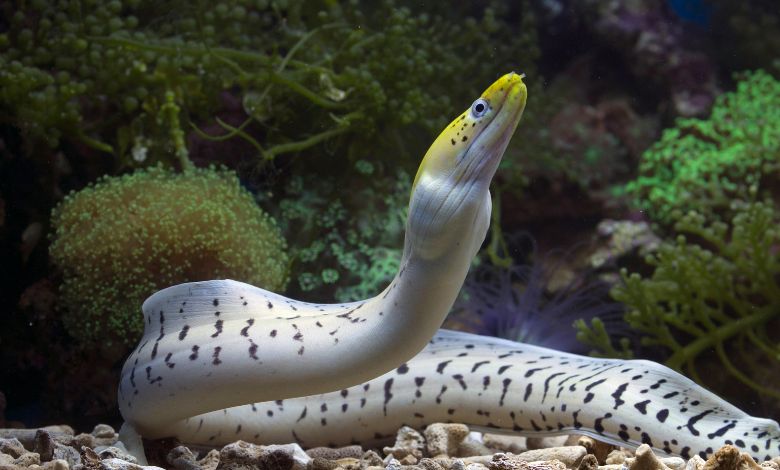
Eels are smart. Shiny Approx liquid themselves.
When you observe one, It doesn’t suggest that way a solid creature I the traditional sense.
It seems so. Water converted into muscle.
So “an eel’ s oil” Recommends:
- Smoothness
- Sleek movement
- Slipperiness
- A body Designed to glide
When applicable. The otter, It emphasizes flow.
It isn’t. A clumsy animal. Made for water.
It runs like it belongs there.
And this the key.
Hughes folded sensory impressions, Sight and touch- to create a creature Which feels basic.
Why Describe an otter like this?
Because Hughes wasn’t just writing about animals.
He was writing about wildness.
If you look at his broader body of work , especially in collections like Lupercal , you’ll notice a pattern. He doesn’t sentimentalize nature. He doesn’t make animals cute or friendly.
He makes them powerful. Otherworldly. Slightly alien.
The otter in this poem is not a petting zoo animal. It is mysterious. Almost mythic.
The opening line , “underwater eyes, an eel’s oil” , strips away human framing. It doesn’t say:
“The otter had shiny fur.”
No. That would be ordinary.
Instead, he compares it to another creature. A fish. Something even more slippery and untouchable.
It’s like describing someone not as “fast,” but as “lightning wearing skin.”
Suddenly, the description becomes visceral.
The Symbolism Behind The sentence
Now let’s go deeper.
Because poetry invites interpretation.
1. Dual identity
Otters dwell in two worlds.
Water and land.
He makes. Them liminal creatures, The creatures that exist on the threshold.
The phrase Strengthens that duality:
- Underwater eyes → aquatic identity
- Eel’ s oil → fish- like quality
Nevertheless the otter is a mammal
It’ s Neither fish nor beast a simple sense.
And metaphorically it can represent:
- Humans
- Something that doesn’t quite fit
- Creatures of transition
- Emotional duality
- The tension between instinct and civilization
Honestly, the more I analyze about it, the more It feels that way Hughes To write about more than just. An animal.
He explores. Identity itself.
2. Sensory immersion
The phrase immediately pulls you underwater.
There is no introduction.
No landscape description first.
You’ re Dive in before you know it.
It’ s Immersive storytelling.
And it works.
Have you ever jumped into it? cold water Unexpected?
That sudden shock?
He what This line does.
It takes you inside.
3. Like nature Something Unknowable
Hughes Often depicts animals. Mysterious forces.
Not cute not related.
There was no relaxation.
The eel comparison Underlines something A bit annoying.
Eels is not cuddly creatures.
They are sinners. Shadowy.
So describing the otter through eel imagery Adds ambiguity.
It’ s Beautiful, but a little scary.
And that tension Keeps readers engaged.
Why is that? Are people looking for this phrase?
Now we go out. The poem And me search intent.
When someone writes
“under water eyes a fish oil”
they’ re Usually try:
- Understand the meaning
- Identify the source
- Analyze. The symbolism
- Confirm if it’ s A quote or a song
It’ s Informational purpose
No one Shopping for? eel oil.
They’ re Confused
Curious
Interesting
And this is what makes this phrase Very interesting– it draws readers in precisely because it doesn’t settle. Immediate sense.
My First Experience Reading The line
I still remember the first time I encountered this phrase.
I was sitting with a cup of coffee, reading poetry casually , not for research, not for analysis , just curiosity.
And I hit that line.
“Underwater eyes, an eel’s oil…”
I actually stopped.
I reread it slowly.
Then out loud.
Because sometimes poetry only clicks when you hear it.
And suddenly I could feel the river. The coolness. The slick movement beneath the surface.
That’s when it hit me: Hughes wasn’t explaining the otter.
He was transforming the reader into one.
The Broader Themes I “An Otter”
To understand the phrase Absolutely, we’ll have to observe the poem’ s larger themes.
Wildness vs Civilization
Hughes Often contradictory raw nature with human structures.
It’s an otter. Outside human systems.
Instinct and Survival
Is not morality in the otter.
No social code.
That’s it instinct.
Mystery
The animal remains partially unknown.
And this is on purpose.
The phrase “underwater eyes, Contributes to a l of oil”.
That mystery.
That doesn’t explain.
It wakes up.
Why Hughes user Animal Imagery With so much power
If you read on. Ted Hughes’ s work, you pursue notice some:
He does not anthropomorphize.
He does not change animals into metaphors. Human emotion I a simplistic way.
Instead, he respects their otherness.
Writing from inside the creature’ s physicality, muscles, skin, water, leg
It’ s Weakness
And that’s why this line Works excellently.
It feels organic, not decorative.
To disrupt Down Structural line
Let’s examine the construction.
“Underwater eyes, an eel’s oil…”
Notice there’s no verb.
No action.
It’s fragmentary.
That creates immediacy.
It’s like a snapshot.
Or flashes of imagery.
Almost cinematic.
Instead of:
“The otter had underwater eyes and skin like an eel.”
We get something sharper. Leaner. More sensory.
And in poetry, economy matters.
Why This Line Feels very memorable
Some lines stick with you because they’re simple.
Others stick because they’re strange.
This one falls into the second category.
It’s unusual enough to demand attention.
But concrete enough to visualize.
That balance is hard to achieve.
It’s like describing someone as “smelling like thunder.” You don’t immediately understand it , but you feel it.
Is There Any Literal Meaning?
Short answer: no.
There’s no actual eel oil involved.
The phrase is metaphorical.
However, historically, eel oil did exist in some cultures as a medicinal substance. But that’s unrelated to this poem.
In Hughes’s context, it’s entirely about texture and movement.
The Emotional Impact of the Imagery
What does the line feel like?
To me, it feels:
- Cold
- Fluid
- Alert
- Slightly eerie
- Wild
It’s not warm. Not comforting.
And that’s intentional.
The otter is not domesticated in this poem.
It’s part of a river ecosystem that predates human presence.
Key Takings:
So what is the meaning of “underwater eyes, an eel’s oil”?
It is:
- A poetic description
- A sensory immersion
- A metaphor for fluid wildness
- An introduction to a liminal creature
- A showcase of Hughes’s powerful nature imagery
But beyond all that, it’s a reminder.
A reminder that language can do more than explain.
It can transform.
The first time I read it, I didn’t understand it instantly.
But maybe that’s the point.
Some lines aren’t meant to be decoded immediately. They’re meant to be experienced.
And once you let yourself sink into it , like slipping into cold river water , the meaning surfaces on its own.
Additional Resources:
- Underwater vision , Wikipedia:Overview of how eyes function and adapt underwater, including biological differences across species.
- Adaptive features of aquatic mammals’ eyes , PubMed: Peer-reviewed study detailing the specialized adaptations of aquatic mammals for underwater vision.