
Discover what my mom’s cousin is to me, understand first cousin once removed, and easily map your family relationships.
Family trees can be incredibly confusing. I still remember the first time I sat down with my grandma, trying to map our entire family. It was a name I had never heard of, cousins I’d met once or twice, and relatives whose titles didn’t make sense to me.
At one point, I stopped, then asked my mom, “What is my mom’s cousin to me?” If you ever wondered the same thing, you are not alone. Family relationships, especially the extended ones, can feel like a maze. Understanding these connections is not just about relatives,it’s also about understanding Society and how families are structured within it.
In this guide, I’ll take you on a journey through family connections, explain exactly what your mom’s cousin is, the “once removed” concept, and how to make sense of it,even if you are a visual learner like me. Exploring these links gives a small glimpse into how Society organizes itself across generations.
Understanding the Basics: Cousins, Generations, and “Removed”
Before we jump into specific relationships, let’s break down some key concepts.
The word “cousin” isn’t nearly as straightforward as it seems.. Your first cousin is someone who has a parent who is your parent’s sibling. So, if your mom has a brother, his child is your first cousin. Simple enough, right?
But then things get a bit more complicated when we talk about your mom’s cousins.
Here’s the key point: Your mom’s cousin is not in the same generation as you. They belong to your mom’s generation. This is where the term “once removed” comes into play.
In genealogical terms, “removed” means the difference in generations. A first cousin “once removed” is one generation apart from you,not your direct peer.
Think of it like climbing stairs: you and your first cousins are on the same step. Your mother’s cousin? They’re a step above you. If a cousin is two generations above, they are removed twice. Simple, right? (Well, once you get the hang of it!)
My Personal Journey with Family Relationships
I remember a summer afternoon when I was around twelve. Our family was in full swing,dozens of relatives had gathered in my grandparents’ backyard. I tried to remember who was who because, frankly, it was too much. There were aunts, uncles, and cousins whose names I had only heard in passing.
I saw my mom chatting with someone she called “my cousin,” and I asked, “What is my mom’s cousin to me?” Her smile and patience were just teasing.
“He’s your first cousin once removed,” she explained. At the time, it felt like an alien concept. But over the years, I found that understanding these relationships was like solving a puzzle. Every connection had a story, a common ancestor, and a place in our family’s history.
This personal experience is why I created this guide,not only to be informative but also to make your understanding of “what my mom’s cousin is to me” relevant and meaningful.
To Break It Down: Who Is My Mother’s Cousin to Me?
Let’s make it crystal clear: your mom’s cousin is your first cousin once removed.
Here’s why:
- First Cousins: Your mother’s cousins are the children of her aunts and uncles on your mother’s side. These are her first cousins.
- Once Removed: Because you are one generation below your mother, her cousin is one generation removed from you.
Think of it like this: your mom’s cousin is a bridge between your mom’s generation and yours. You can’t interact on the same level as your mom’s peers, but the connection is still there,rooted in shared family history.
When you ask, “What is my mom’s cousin to me?” this explanation should give clarity and confidence in identifying your relatives correctly.
Visualizing Connections: Examples of Family Trees
Sometimes words are not enough. I found it incredibly useful to create a family tree diagram when I was little. Here’s a simple example:
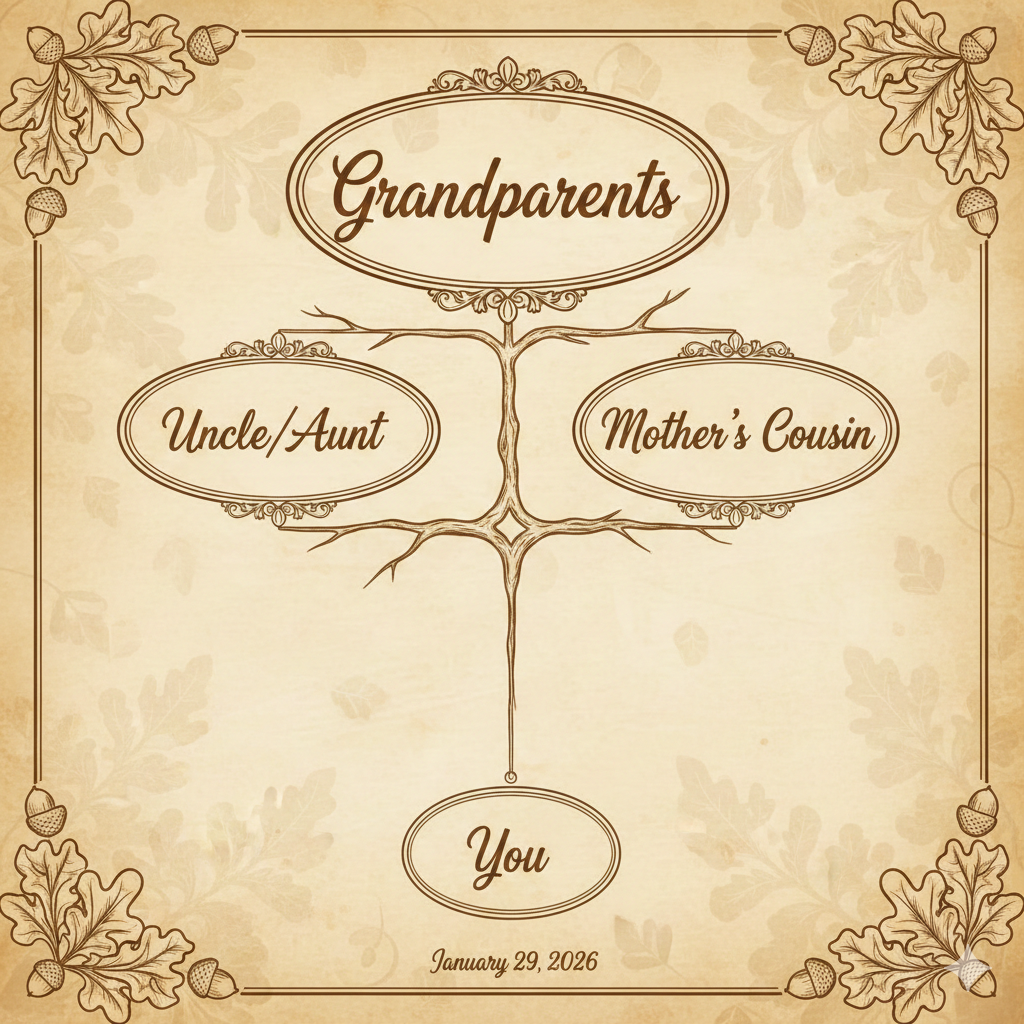
In this scenario, your mother’s cousin is on the same level as your mom (same generation), but you are one step below. That’s exactly why the phrase “once removed” exists.
If you are a visual learner like me, I highly recommend drawing your family tree. It makes remembering relationships and understanding how people are connected much easier.
Why “Once Removed” Matters
You may be wondering why we even bother with these terms. Can’t we just call everyone cousins?
Of course, in casual conversation, you can. But if you need precision,especially for genealogical records, family histories, or legal documents,these terms are important.
For example:
- In inheritance cases or family trusts, the exact relationship defines rights.
- When filling out family medical histories, precise terms help doctors understand potential genetic risks.
In short, while informal chats may not require precision, understanding these terms ensures clarity and avoids confusion in important matters. Anytime you’re unsure, asking “What is my mom’s cousin to me?” will give you the correct, official answer.
Related Metaphors: Making Sense of It
Let’s make it even more relatable. Think of your family as a ladder of generations:
- Each step represents a generation.
- You are on step 0.
- Your parents are on step 1.
- Your grandparents are on step 2.
- Your first cousins share your step (step 0).
- Your mother’s cousin? Step 1,they are one step above you, hence “once removed.”
Another analogy: consider your family like a sports team. Your mother’s cousins are senior players,they’ve been around longer, know the plays, and have experience your generation lacks. You, the junior player, learn from them while staying connected through shared team history.
When Your Mom’s Cousin Has Kids
Here’s where it gets fun. If your mom’s cousin has children, those kids are your generation. They become your second cousins.
For example: my mother’s cousin had a daughter named Sarah. Growing up, I called Sarah simply “cousin,” but technically, she was my second cousin. We played together, celebrated birthdays, and shared secrets,the label didn’t mean much.
Now that I understand the family history, I appreciate these labels,they help map our family tree accurately.
Cultural Variations in Addressing Cousins
One thing I’ve seen across families and cultures is that titles aren’t always strictly used.
- In some cultures, your mother’s cousin may be casually referred to as an aunt or uncle, especially if there is a significant age difference.
- In other cases, “cousin” or even first names is used.
Personally, I grew up calling my mom’s cousins by their first names. But during family reunions, my grandmother would remind me, “Remember, he is your first cousin once removed!” It was a fun way to keep the terminology alive while staying comfortable.
Tips for Remembering Family Relationships
Understanding extended family terms can feel like learning a new language. Here are some tips that helped me:
- Draw your family tree: Visual aids make relationships easier to grasp.
- Use sticky notes or labels: When meeting relatives, note their relationship to you.
- Tell stories: Link names to memories or anecdotes,it makes it more personal.
- Practice saying the terms: First cousin, second cousin, and “once removed”,saying them out loud reinforces memory.
Whenever I’m lost, I ask, “What is my mom’s cousin to me?” It always helps me place everyone correctly.
Common Confusions and Mistakes
Even adults can get confused by family relationships. Some common errors include:
- Assuming all cousins are the same generation.
- Mixing up first cousins and second cousins.
- Forgetting the “once removed” component when generations differ.
I’ll admit, I used to mix them all up. During one family reunion, I confidently called my mom’s cousin my second cousin, and my grandma gently corrected me. It was embarrassing, but a great learning moment.
Why Does It Matter? Beyond Labels
Understanding your mom’s cousin is not just about terminology. It’s about:
- Connecting with your roots: Knowing your extended family helps define your heritage.
- Navigating family events: Weddings, reunions, or holidays become less confusing.
- Medical history: Family records often require precise relationships.
For me, knowing these relationships deepened my family connections. I started exploring family history, learning stories about ancestors, and realizing that “once removed” cousins were actually treasures of wisdom and experience.
Key Takings:
- So, what is your mom’s cousin to you? Simply put, they are your first cousin once removed. But beyond the label, they represent a connection to your family’s history, traditions, and shared experiences.
- Family relationships may seem confusing at first, but once you understand the structure and terminology, it becomes a fascinating journey. I encourage you to map out your family tree, learn the stories behind the names, and embrace the quirks of family labels.
- Remember, whether you call them a cousin, an uncle, or just by their first name, what truly matters is the connection you share. Labels are useful, yes, but relationships are about love, respect, and shared memories.
- And if you ever find yourself at a family reunion staring at a relative and wondering, “what is my moms cousin to me,”,you can confidently answer: “First cousin once removed!” And maybe, just maybe, you’ll impress everyone with your genealogy skills.
Additional Resources:
- What Relation Is My Mom’s Cousin to Me? , Reference.com: A clear explanation that your mom’s cousin is your first cousin once removed, including why “once removed” applies when there’s a generational difference.
- What Is My Mom’s Cousin to Me? , Sivo Family Relationships: Breaks down the relationship in simple terms and explains how you share common ancestors (great-grandparents) with your mother’s cousin.